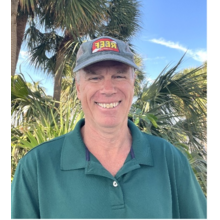
Author: Noa Parks, Citizen Science Coordinator
Every July, REEF hosts a monthlong celebration inviting divers and snorkelers around the world to get in the water and submit surveys. Whether you're a seasoned surveyor or just getting started, the Great Annual Fish Count (GAFC) is the perfect time to dive into surveying. You can find an event near you or learn how to host your own at www.fishcount.org.
Did we mention there are prizes involved? Every survey you submit in July = one entry into the GAFC prize drawing. The winner will be able to choose between a REEF swag bag or an ID book of their choice!
Author: Noa Parks, Citizen Science Coordinator
See the Volunteer Fish Survey Project come to life in the new REEF Ocean Exploration Center in Key Largo, Florida! Admission to the Center is free, and all are welcome.
We invite you to visit and check out the interactive exhibits showcasing power of citizen science and how fish surveys make a difference. Here's what you can dive in and discover:
• Explore REEF survey regions with an interactive touchscreen display that highlights stats like the number of species reported, total surveys completed, and view the top 10 most sighted species in that area, plus enjoy marine life video montages!
• Meet fellow citizen scientists through the “Faces of REEF” display, which spotlights REEF surveyors worldwide.
• Conduct a REEF survey without getting wet! Take in the breathtaking floor-to-ceiling reef sculpture that features hand-crafted fish models.
• Test your fish ID knowledge by trying our #CenturyDive Challenge by searching for the 100+ fish species hidden throughout the Center!
• Learn how REEF data are used to support marine science and conservation - from helping track Sunflower Sea Star populations to supporting Goliath Grouper protection, your contributions as citizen scientists are what powers it all!
For more info about the Ocean Exploration Center, visit www.REEF.org/oec.
Author: Peter Leahy, REEF Volunteer Surveyor
REEF member Peter Leahy has been conducting REEF surveys since 1994. Since then, he has contributed more than 5,000 surveys to the REEF database. He enjoys accessing the database and sharing how anyone can use this resource to gain their own insights. Last year, Peter went to Costa Rica - a destination where he had never surveyed before - and wanted to know what fish he would be likely to see.
Check out his tips on navigating the REEF database before your next dive trip!
In July, my wife and I visited the Pacific side of Costa Rica to go diving, birding, and horseback riding. Of course, I will be doing fish surveys, but I have never surveyed in the Tropical Eastern Pacific (TEP) survey region. So, how do I prepare? I use the REEF website and navigate to “Explore Database-Create Reports” and select “Batch Reports" found at this link https://www.REEF.org/db/reports/batch.
REEF has conducted several trips to the area of Costa Rica that I am visiting, including one in July 2018 and another in July 2021. Viewing a batch report from a REEF Trip can tell you what species were recorded, in what numbers, at what dive sites, by how many observers, and novice or expert status of the observers. It also reports the individual REEF members, but only reports the observations as a whole group, as opposed to individual efforts. Below is a comparison of two recent REEF Trips to Costa Rica.
| |
July 2018 |
July 2021 |
| Surveyors |
18 |
12 |
| Total Surveys |
54 |
79 |
| Total Species |
123 |
122 |
| Total Sites Surveyed |
7 |
12 |
| # Species Reported 75% |
9 |
13 |
| # Species Reported 50% |
29 |
26 |
| # Species Reported 25% |
41 |
46 |
| Species to Effort Ratio |
2.27 |
1.54 |
Comparing the Species to Effort Ratio for the trip trips tells me that there are not many more species to be added for these sites without a great amount of effort. The top ten species observed on both trips overlap but not entirely, giving a total of 13 species: Barberfish, Balloonfish, King Angelfish, Panamic Sergeant Major, Flag Cabrilla, Guineafowl Puffer, Orangeside Triggerfish, Acapulco Damselfish, Threebanded Butterflyfish, Spottail Grunt, Panama Graysby, Reef Cornetfish, and Scissortail Chromis. Based on this, I chose to focus my energy on studying images of these species, and the other species that occur at least 25% of the time. Thanks to these batch reports available on the REEF website, I was able to narrow down which fish to focus on before I started looking.
Peter Leahy grew up in Long Island, New York, where he developed a profound appreciation for inhabitants and nearby inhabitants of the surrounding water, especially fish. A thirty-five-year career as a marine engineer allowed him to travel the world and visit more than 60 countries. He has a B.A. in mathematics from Southern New Hampshire University, an M.S. in Data Analytics from Southern New Hampshire University, and an M.S. in Marine Science and Oceanography from Florida Atlantic University. He learned to scuba dive in 1989 in St. Croix and started conducting REEF surveys in 1994. He is now among the most prolific REEF surveyors, having conducted more than 4,700 REEF surveys to date. In addition to contributing surveys to REEF, he regularly contributes to Ebird.org and iNaturalist.org. He has been a PADI scuba instructor for thirty years and is a published underwater photographer. He can be frequently found at Lauderdale by the Sea and Blue Heron Bridge where he offers guided tours, Underwater Naturalist classes, and Fish ID courses. Tiger Gobies, Atlantic Spadefish, and all hamlet species are some of his favorite fishes.
King Angelfish photo: Carol Cox