

Welcome to the Fall/Winter 2025 edition of the REEF Surveyor Newsletter, featuring information about the REEF Volunteer Fish Survey Project (VFSP), including survey tips, upcoming events, REEF database tricks, and how your participation is making a difference in the health of the oceans.
Thanks to REEF surveyors like you, the VFSP has generated the world’s largest marine life sightings database, used by scientists, resource managers, and government agencies to better understand, study, and protect marine ecosystems. Thank you for all you do, and happy surveying!
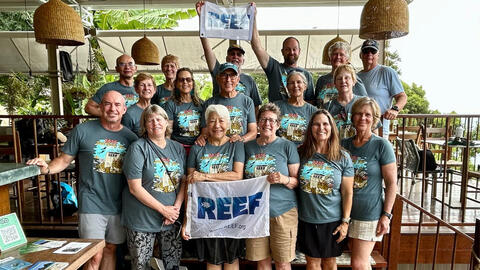
Looking for a dive trip to learn more about marine life? Join us on a REEF Field Survey Trip! Destinations with open spaces include:
Jamaica - March 14-21, 2026
Cayman Brac - April 4-11, 2026
Fiji - April 18-28, 2026
St. Eustatius - May 9-16. 2026
Cuba - June 27-July 4, 2026
Tubbataha, Philippines - June 28-July 8, 2026
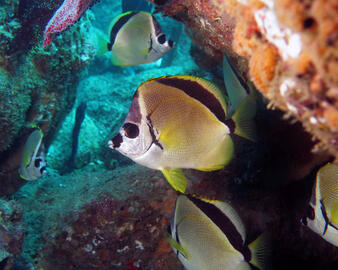
Looking for meaningful gifts this holiday season? With REEF’s Shop to Support program, your purchases can help protect oceans and fuel citizen science. By shopping through REEF’s online store or supporting partner businesses, you can give gifts that give back.
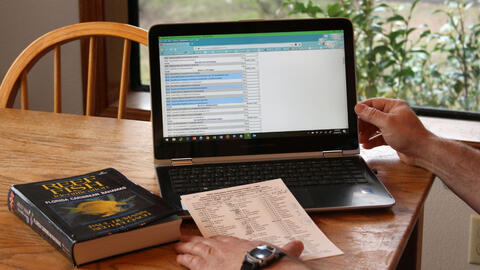
Wondering how to fix a mistake on your REEF survey? It depends on whether you’ve hit the SUBMIT button.
If your survey is still listed under “Surveys In Progress” (after the address confirmation screen), you can edit it yourself. Before submitting, we suggest reviewing your photos and confirming all IDs.
If you’ve already submitted your survey, no problem! Email us with the 7-digit survey number and details about what needs to be added, changed, or deleted, and we'll be happy to get it updated for you.
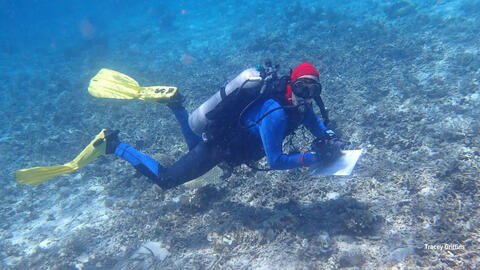
Ever recognize a fish instantly, without knowing how? That intuitive sense is called GISS or Jizz - short for “general impression of size and shape.” Originating from WWII aircraft spotting and later adopted by naturalists, it describes the instinctive recognition of a species through its overall look and behavior. The term "jizz” first appeared in an Irish natural history column in 1921, and is likely derived from the German word gestalt, meaning a complete shape or form. It's often used in birdwatching.
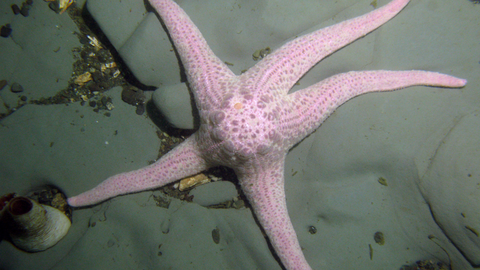
On average, more than 1,000 REEF surveys are submitted each month by volunteer divers worldwide, adding to the world’s most comprehensive marine fish biodiversity database. Since January 2024, 22,665 surveys have been submitted by 1,226 REEF volunteer surveyors.
In 2025, we’ve received several exciting new data requests from researchers using REEF data for important studies, including:
• North Carolina State University: studying South Atlantic marine life.
• Simon Fraser University: tracking Spiny Pink Sea Star trends in British Columbia.
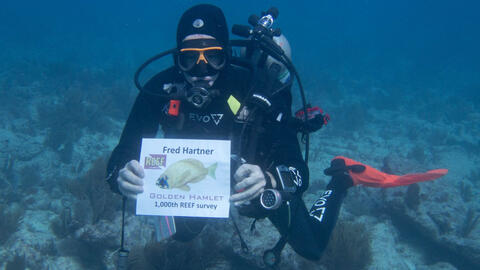
At REEF, every survey you submit adds vital data to marine conservation, and we love celebrating your contributions! As you reach key milestones in the Volunteer Fish Survey Project, you’ll receive recognition along the way:
• 100 Surveys: Congrats email and printable certificate.
• 500 Surveys - Juvenile Golden Hamlet: Mailed certificate, webpage listing, and social media shoutout.
Welcome to the Spring edition of the Volunteer Fish Survey Project (VFSP) Newsletter. We are celebrating Citizen Science Month, taking a look back at a remarkable 2025 in the data, pulling back the curtain on what happens after you hit submit, highlighting recent science that relied on your fish surveys, and announcing the full 2027 Field Survey Trip schedule. As always, thank you for making every one of these stories possible.
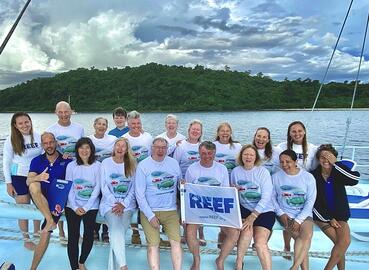
Last month, we released the 2027 REEF Field Survey Trips schedule, along with a few trips in 2028 and 2029. We have plenty of exciting destinations planned! REEF Trips are led by marine life experts, and include diving, fish ID classes, and fun with like-minded friends. Divers, snorkelers, and families are welcome on REEF Trips.
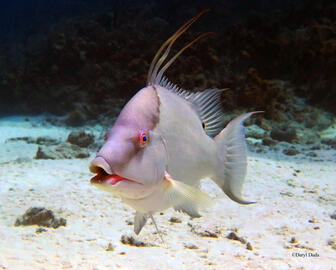
With almost 350,000 hours of underwater visual survey time collected at more than 17,000 locations around the world over the last 33 years, the REEF Volunteer Fish Survey Project represents one of the most comprehensive marine sightings databases available. We are grateful to you and the thousands of other volunteers who have contributed to this amazing citizen science effort. We are excited to share two recent uses of the REEF database for conservation and ecological studies.