
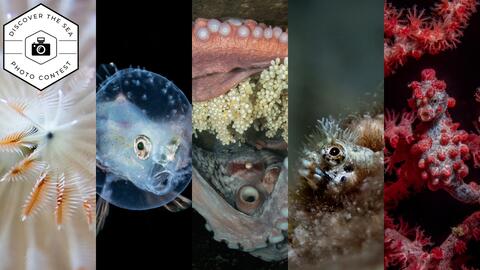
Submissions for the 2026 REEF Discover the Sea Underwater Photography Contest are now open! All ocean photographers are invited to submit their favorite photos. It’s free to enter, and you may submit up to three photos per person in each of the following categories:
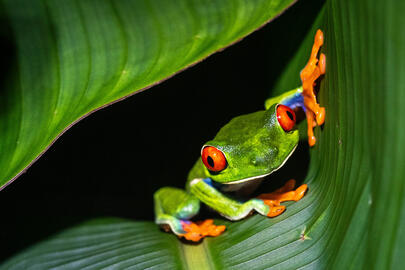
If you’re looking for a Field Survey Trip that offers more than just snorkeling and diving, REEF’s Costa Rica Eco-Adventure Field Survey Trip is right up your alley. This unique eco-adventure combines diving and snorkeling with Costa Rica’s incredible marine life and exciting land-based adventures through its vibrant tropical rainforests. The weeklong itinerary includes four days of diving and snorkeling, with two dives per day to conduct REEF surveys, along with land tours in Monteverde that showcase the incredible biodiversity of this amazing destination.

Meet our September Fish of the Month, the Painted Comber, Serranus scriba, a small but spectacularly decorated member of the sea bass family. Its name says it all: the intricate scribble of blue and red lines across its head looks as though an artist signed their work, and once you have seen one up close, it is hard to forget.
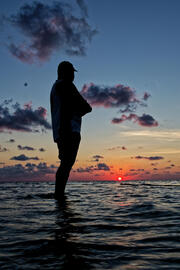
Congratulations to REEF surveyor Steve Vinitsky, who recently joined the Golden Hamlet Club! This distinguished group is made up of highly dedicated volunteers who have conducted 1,000 or more REEF surveys in contribution to the Volunteer Fish Survey Project.
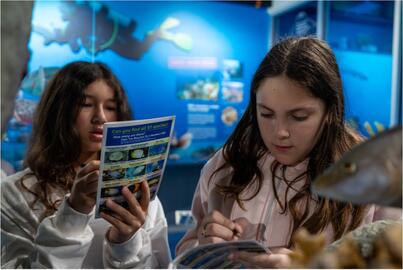
This school year, REEF is excited to partner with Key Largo School on a new series of eight Discovery Programs, made possible through the Art Builds Community 2027 grant. Over the coming months, more than 400 local students will be invited to explore the natural ecosystems of the Florida Keys through hands-on art and environmental storytelling.
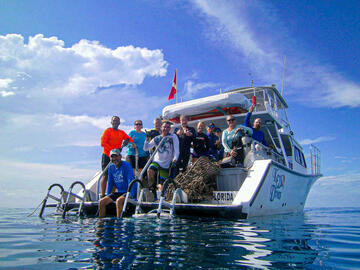
REEF Fest 2026 is almost here, and this year mornings are all about getting out on the water. From October 15 to 17, our REEF Fest Experience Partners are offering diving, snorkeling, and marine science adventures up and down the Upper Keys, so you can build the kind of REEF Fest that suits you best. Spend your mornings underwater, then join us at the Ocean Exploration Center in the afternoons and evenings for seminars and social events.
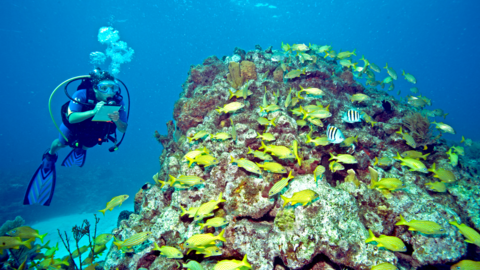
Did you know that REEF has the largest marine biodiversity database in the world? You can access a variety of reports to bring this data into your classroom or programs. Incorporating REEF data into lessons allows students to graph and synthesize real-world information, analyze trends, and pose their own questions. Using the REEF database, you can generate different types of reports to show all of the fish species documented in a given area, or dive deeper by examining the distribution of a specific species or family.
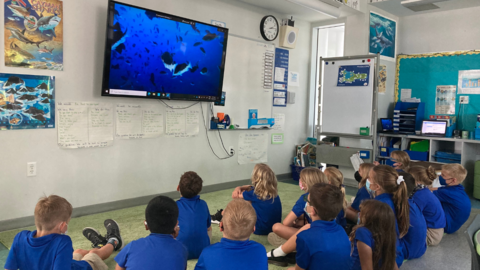
Each winter, thousands of endangered Nassau Grouper gather at a special location in the waters of Little Cayman to spawn after the full moon. REEF has developed Grouper Moon educator resources to engage students with this amazing natural phenomenon, and help them understand the ecological, and cultural importance of Nassau Grouper as a top predator on Caribbean coral reefs.
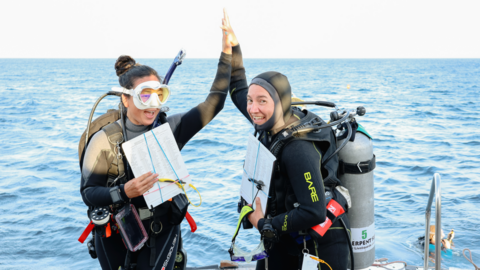
We are now accepting applications for the 2024 REEF Educator in the Field Fellowship! This exciting professional development opportunity offers formal and informal educators the chance to gain experience with ocean citizen science. The Fellowship, awarded annually, is generously supported by CEDAM International. This year's Educator in the Field Fellowship recipient will join the REEF Field Survey Trip to Bonaire on July 20-27, 2024, to learn about marine life and citizen science, and conduct fish surveys while scuba diving or snorkeling as part of the REEF Volunteer Fish Survey Project.
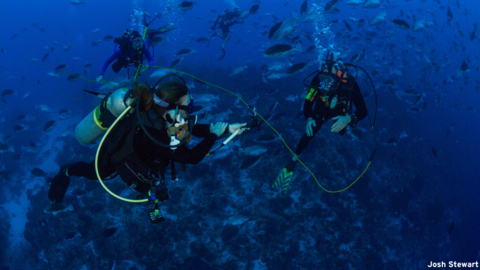
You and your students are invited to dive into science and research by tuning in to a live-from-the-field webchat with scientists studying the Nassau Grouper aggregations in the Cayman Islands!