
Register for REEF's Marathon Lionfish Collecting & Handling Workshop
Wednesday, September 7 - Tilden's Scuba Center (Isla Bella Resort), 4650 Overseas Hwy, Marathon, FL 33050
Wednesday, September 7 - Tilden's Scuba Center (Isla Bella Resort), 4650 Overseas Hwy, Marathon, FL 33050
Images and text by Erin Spencer
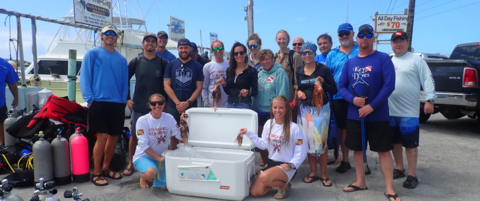
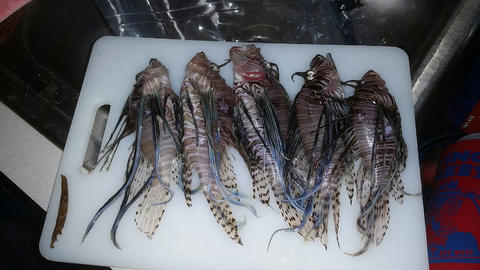
Check out some of the photos from our third day on the Lionfish Control Study in Curacao! After a two tank dive in the morning (where we collected 176 lionfish), the team celebrated with a Ceviche Party at Kura Hulanda Lodge. The event was attended by trip participants, local lionfish enthusiasts, and Lodge visitors alike.
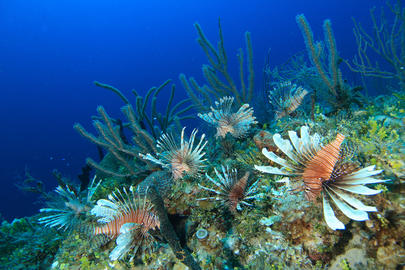
REEF is offering a series of free Lionfish Collection and Handling Workshops throughout south Florida and the Keys. Each workshop will include a classroom session covering the background of the invasion, lionfish biology, ecological impacts, current research, collecting and handling techniques, and other ways you can get involved. Attendees can obtain a permit to collect lionfish within the Sanctuary Preservation Areas (SPAs) in the Florida Keys National Marine Sanctuary using hand nets only.
REEF is continuing our ground-breaking research and outreach on the lionfish invasion with projects in Puerto Rico and the US Virgin Islands. The project is supported with funding from the NOAA Coral Reef Conservation Grant and the Buck Island REEF National Park and long-time supporters Henry Foundation, Oceans Foundation and Munson Foundation.
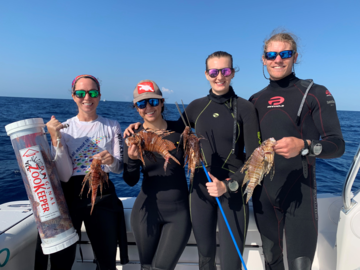
Learn how to safely conduct lionfish removals by attending a REEF Invasive Lionfish Collecting & Handling Workshop.
Workshops include a classroom portion that covers background on the invasion, lionfish biology, ecological impacts, current research, and collecting and handling techniques. After we wrap up the classroom portion of the workshop, we will head out to the water for a 2-tank dive to put our skills to work.

Friday, April 28 - Looe Key Reef Resort, 27340 Overseas Hwy., Ramrod Key, FL 33042
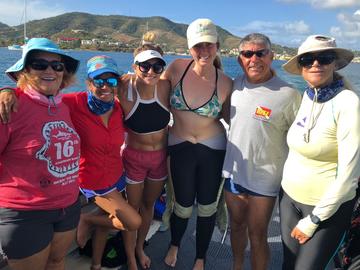
REEF, in collaboration with the University of Virgin Islands and Buck Island National Monument, took a major step last week in a novel study to better understand lionfish movement and factors that may influence that movement. The study, focusing on a 2km area of patch and continuous reef in St Croix, used innovative underwater tagging techniques pioneered by REEF to surgically implant transmitters into invasive lionfish within an array of receivers, allowing the team to pinpoint movement of the fish over the next year.
REEF is excited to announce the release of Invasive Lionfish: A Guide to Control and Management. Available as an e-book to view and/or download (formatted for desktop and mobile devices), this extensive manual was created to aid coastal managers and field workers in effectively managing the invasive lionfish problem.
Join REEF for an evening of eating and entertainment at Piccolo Ristorante. The event will include a four course tapas style lionfish dinner, complimentary wine and beer, lionfish education, filleting demonstration, and cooking instruction by Piccolo's very own Chef Andres Avayu.