
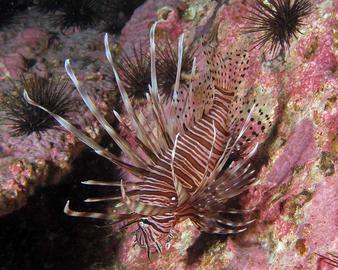
Earlier this year, a special issue of the scientific journal, Marine Ecology Progress Series, was published titled "Invasion of Atlantic Coastal Ecosystems by Pacific Lionfish". The issue is a compilation of papers presented at the 2015 special session of the Gulf and Caribbean Fisheries Institute meeting, which was co-organized by REEF and partner organizations.
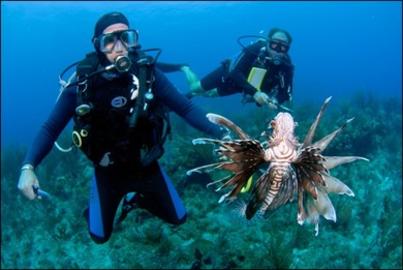
REEF teamed up with the Coral Restoration Foundation (CRF) during the second week of September to host the first-ever “Corals In & Lionfish Out,” a series of events to engage and educate the public while raising funds for coral restoration and invasive lionfish removal efforts in the Florida Keys. “Corals In & Lionfish Out” coincided with REEF’s Fifth Annual Key Largo Lionfish Derby, which was held at John Pennekamp Coral Reef State Park on Sept. 13.

The impacts of invasive lionfish (Pterois volitans/miles) on native coral reef populations in the Western Atlantic Ocean and Caribbean Sea can be enormous.
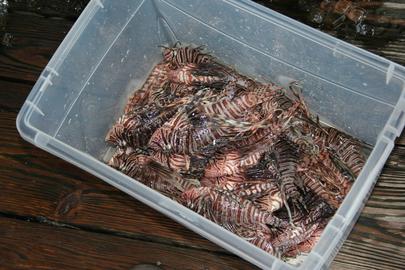
Approximately 100 divers collected 534 Indo-Pacific red lionfish during the first tournament dedicated to reducing the population of the invasive species in the Florida Keys waters. The September 11 tournament in Key Largo, organized by REEF and the Florida Keys National Marine Sanctuary, is the first of three Keys-based lionfish roundups. The event attracted 27 teams that competed for cash and prizes to collect the most, largest and smallest lionfish. The winning team captured 111 lionfish during the single day event.
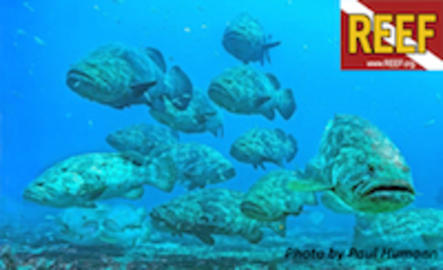
Please join me this year by giving a gift to REEF this holiday season! I want to thank all those who have been so generous and have donated already. If you haven’t given yet, we are still a long way from our goal. Your donation this winter is critical so we can continue protecting marine species all year. Click here to donate now.
Examples of REEF’s important work that directly benefit marine species include:
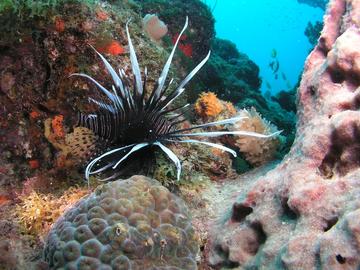
As the spread and impact of the invasive Indo-Pacific red lionfish explodes in the western Atlantic region, REEF continues to take a lead in addressing this complex environmental issue. In addition to extensive outreach and education efforts, REEF staff is involved in several field research projects to study the ecological impact of this voracious predator. REEF is also coordinating regional response efforts. In partnership with the International Coral Reef Initiative (ICRI), NOAA, Mexico and France, REEF helped fund and organize the first Regional Lionfish Strategy Workshop in August.
This paper is the introduction to a special issue of the journal, Marine Ecology Progress Series, titled "Invasion of Atlantic coastal ecosystems by Pacific lionfish". The issue is a compilation of papers presented at the 2015 special session of the Gulf and Caribbean Fisheries Institute meeting, which was co-organized by REEF and partner organizations.
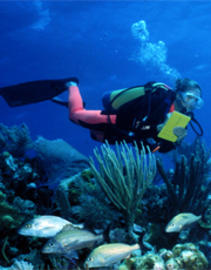
Every month, scientists, government agencies, and other groups request raw data from REEF’s Fish Survey Project database. Here is a sampling of who has asked for REEF data recently and what they are using it for:
- Researchers at the World Resources Institute are using western Atlantic REEF data in an analysis of threats to the world’s coral reefs called Reefs at Risk Revisited.
- A scientist from Washington Department of Fish and Wildlife is evaluating population trends of rock scallop in preparation for harvest rule updates.
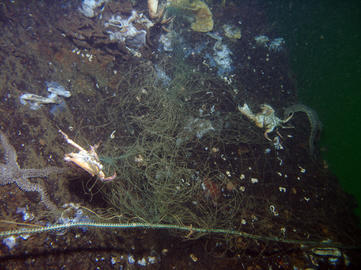
Last Summer during a dive with Pacific Adventure Charters in Hood Canal, Washington, a group of REEF Pacific Advanced Assessment Team (AAT) surveyors came across something unexpected. As part of REEF’s funded project with The Russell Family Foundation, the team’s goal was to look for invasive tunicates and do REEF marine life surveys on several previously unsurveyed sites. While they found the invasive tunicates they were looking for, they also found a derelict fishing net that was damaging fragile habitat and ensnaring marine life.
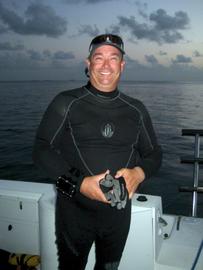
REEF is proud to announce Ed Martin, of Islamorada, Florida, as our 2015 Volunteer of the Year. Ed became a REEF member in 2012, and has since conducted 60 REEF surveys in the Tropical Western Atlantic (TWA) region. He is also a skilled underwater photographer and a member of the Century Club, having recorded at least 100 fish species on a one tank dive. In 2015, Ed became a member of REEF's Advanced Assessment Team by achieving 'Expert' surveyor status in the TWA.