Every month, scientists, government agencies, and other groups request raw data from REEF’s Fish Survey Project database. Here is a sampling of who has asked for REEF data recently and what they are using it for:

- A National Research Council post-doctoral fellow is using REEF sightings data on manta and mobula to evaluate global populations of these at-risk species.

- A researcher is evaluating fish distribution and abundance data from south Florida to be included in a NOAA document used to respond to oil spills.

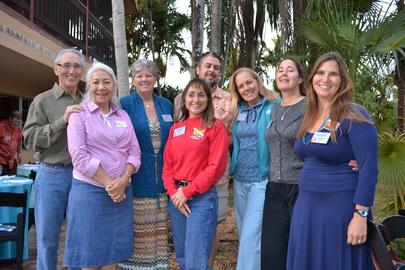
REEF members are at the heart of our grassroots marine conservation programs. Over 43,000 divers, snorkelers, students, and armchair naturalists stand behind our mission.

To celebrate 20 years of ocean conservation and education through the Volunteer Survey Project, and to honor our members for making these successes possible, REEF will be hosting a fun-filled weekend of diving, learning, and parties -- August 8-11, 2013, in Key Largo. Please mark your calendar and save the date! More details will be announced in the coming months. The first REEF surveys were conducted during a Field Survey trip in Key Largo, Florida, in the summer of 1993.

For more than 20 years, REEF has been conserving marine ecosystems through education, service, and research. It’s an exciting time for REEF as we work hard to extend the reach of our innovative marine conservation programs. One way REEF is doing this is by inviting diverse leaders to the Board of Trustees to help guide the foundation, including these three new members:

New Fishinars have been added! Check out the Webinar Training page (www.REEF.org/resources/webinars). These popular online training sessions provide fishie fun in the comfort of your own home. Fishinars are free, and open to all REEF members. You need to register for each session you want to attend. No special software is required, just a web browser. Upcoming sessions include:

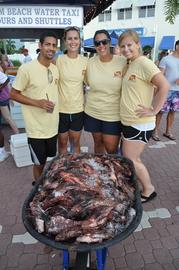
This summer REEF, in partnership with Divers Direct and SeaGrant Florida, hosted its third annual Lionfish Derby Series. The series included four derbies in Florida (Miami, Fort Lauderdale, West Palm Beach, and Key Largo) and one in Green Turtle Key, Bahamas. The event series was a huge success—in total, 219 participants in 60 teams brought in a total of 2,694 lionfish!

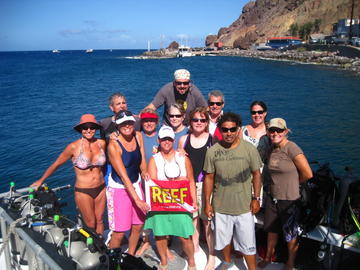
REEF is proud to partner with over 130 dive shops, dive clubs, individuals, and other organizations as REEF Field Stations.

Need to get away before the holidays get started? Two spots are still available on the Cuan Law livaboard November 11-17, one female share and one male share. This luxurious trimaran features a wonderful menu, wide stable platform, and dive sites of various habitats sailing around the British Virgin Islands – the perfect live-aboard combo! Some of the interesting fish we will be searching for include lancer dragonets, spotted eagle rays, and striking indigo hamlets.

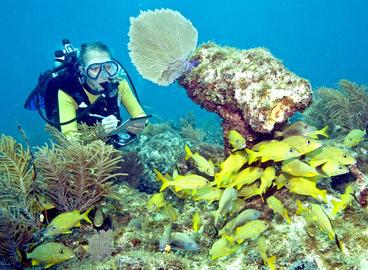
New research using powerful genetic techniques and the REEF survey data have revealed two new species of hamlet in the Caribbean. The findings were recently published by scientist Ben Victor in the Journal of the Ocean Science Foundation. As our Caribbean surveyors know, hamlets are a group of colorful small sea basses that can sometimes cause ID confusion because of their myriad of colors and patterns. The varied color patterns in these small predators are thought to be a result of mimicry of other colorful but more innocuous herbivore species.

REEF members are at the heart of our grassroots marine conservation programs. Over 43,000 divers, snorkelers, students, and armchair naturalists stand behind our mission.

This month we highlight Rick Long. Rick joined REEF in 1997 and has conducted 469 surveys, making him one of Hawaii's top surveyors. Mike is a member of the Hawaii REEF Advanced Assessment Team and he lives on Maui. Here's what he had to say about REEF:

How did you first get involved with REEF?

Pages