
Every REEF survey tells part of the story of our ocean, and together, more than three decades of volunteer observations have created an extraordinary record of marine biodiversity. Just as important as collecting those data is making sure they remain accurate, accessible, and useful well into the future. REEF Co-Executive Director Dr.
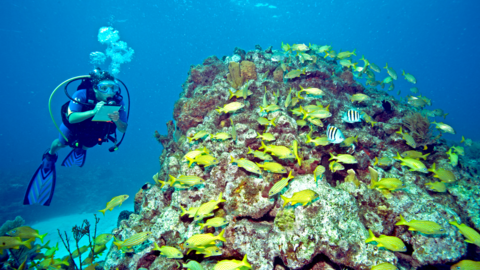
Did you know that REEF has the largest marine biodiversity database in the world? You can access a variety of reports to bring this data into your classroom or programs. Incorporating REEF data into lessons allows students to graph and synthesize real-world information, analyze trends, and pose their own questions. Using the REEF database, you can generate different types of reports to show all of the fish species documented in a given area, or dive deeper by examining the distribution of a specific species or family.
Each winter, thousands of endangered Nassau Grouper gather at a special location in the waters of Little Cayman to spawn after the full moon. REEF has developed Grouper Moon educator resources to engage students with this amazing natural phenomenon, and help them understand the ecological, and cultural importance of Nassau Grouper as a top predator on Caribbean coral reefs.
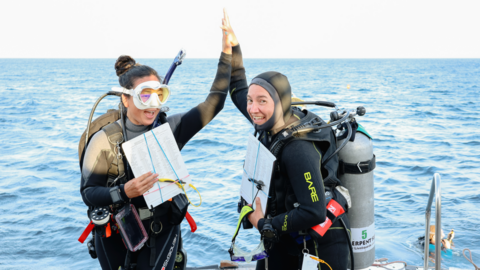
We are now accepting applications for the 2024 REEF Educator in the Field Fellowship! This exciting professional development opportunity offers formal and informal educators the chance to gain experience with ocean citizen science. The Fellowship, awarded annually, is generously supported by CEDAM International. This year's Educator in the Field Fellowship recipient will join the REEF Field Survey Trip to Bonaire on July 20-27, 2024, to learn about marine life and citizen science, and conduct fish surveys while scuba diving or snorkeling as part of the REEF Volunteer Fish Survey Project.
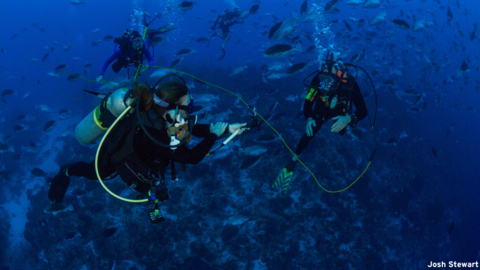
You and your students are invited to dive into science and research by tuning in to a live-from-the-field webchat with scientists studying the Nassau Grouper aggregations in the Cayman Islands!
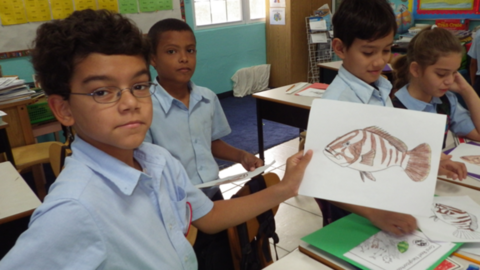
Grouper Moon education resources are available for all grades. Lessons are easily integrated into existing curricula, or can be taught as an immersive unit with scaffolded lessons. Resources include games like Guess Who, Grouper Moon-O, Race to Survival, and Human Food Web.
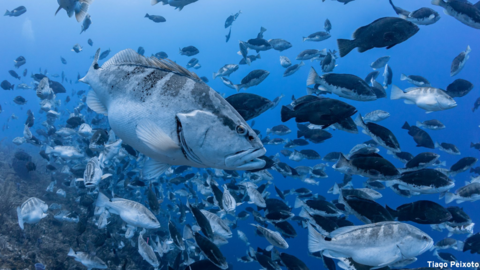
The Grouper Moon Project is a collaborative research effort between REEF, the Cayman Islands Department of Environment (DoE), and scientists at Scripps Institution of Oceanography at UC San Diego and Oregon State University, aimed at studying one of the largest and last known spawning aggregations of endangered Nassau Grouper.
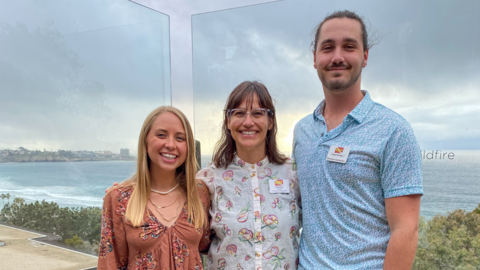
The REEF Ocean Explorers Education team has grown! We recently welcomed Mead Krówka to the team as Education Coordinator. Read on to learn more about our education staff.
Mead Krówka, Education Coordinator - Mead joined the REEF team this past February. He will provide support for Ocean Explorers Programs at the REEF Campus in Key Largo, assist with program and curriculum development, coordinate community outreach efforts, and oversee the REEF Marine Conservation Internship.
All are invited to join us online on Thursday, May 9 at 8pm EDT for a special webinar, Oceans for All: Exploring Diverse Experiences in Marine Conservation.
This free webinar features a panel of diverse professionals in marine science and conservation. It is an excellent way for students of all ages to explore various pathways to science and conservation careers. Click here to register for the webinar and read about our amazing panelists.
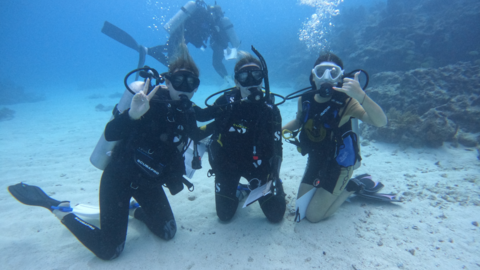
The REEF Volunteer Fish Survey Project represents the largest marine life database in the world! You can bring this data into your classroom or programs.
Marine Science II Honors students at Coral Shores High School in Islamorada, Florida, recently assessed trends and patterns in the ecosystem health by comparing two sites in the Florida Keys.