
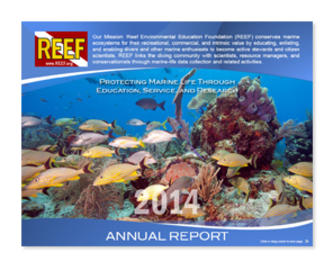
We are proud to release REEF's 2014 Annual Report, reviewing accomplishments from our ocean conservation and education programs. Click here to view the Annual Report. In the report, we highlight many achievements and successes in 2014, such as:
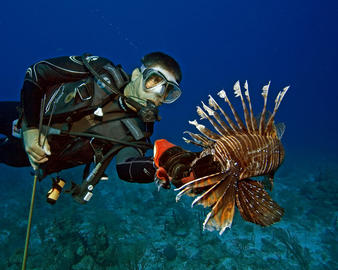
REEF is continuing to lead the charge on combating invasive lionfish! The 2016 Lionfish Derby Series is just around the corner and it’s going to be bigger than ever.
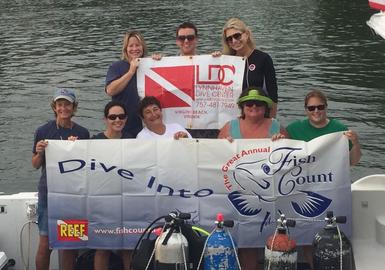
REEF’s 2016 Great Annual Fish Count (GAFC) brought together experienced and beginner fish watchers to count fish (and invertebrate) populations. Beginning fish ID classes were held, and then students were able to use their new skills out in the water during organized GAFC events. Participating groups and shops this year were based in several of REEF's regions, including the TWA, SAS, NE, CAL and PNW regions. The biggest GAFC events this year were held in our NE and California regions.
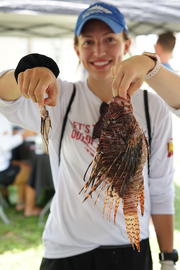
Purchase your VIP passes or register a team today! For complete event details, visit www.REEF.org/lionfish/derbies.

On Saturday, March 30, ten teams of 34 divers removed 620 invasive lionfish during REEF’s 7th Annual Winter Lionfish Derby, held at Sharkey’s Pub and Galley Restaurant in Key Largo. Between sunrise and 6 p.m., competitors scoured Florida Keys reefs in an attempt to to bring in the smallest lionfish, largest lionfish, and most number of individual lionfish. Team Forever Young caught the most fish at 149 individual lionfish.
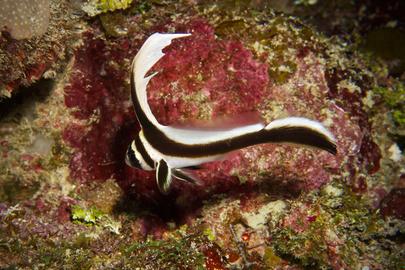
This month, REEF members worldwide are invited to participate in our first underwater photography contest! Members may submit one photo in each of six different categories including fish portrait, macro, invertebrates, REEF surveyor, lionfish/invasive species, and reefscape/habitat/environment. Submissions will be judged by three separate panels including professional photographers, REEF staff and board, and popular vote. Each judging panel will select a winning photo from each of the six categories, for a total of 18 winning photographs.
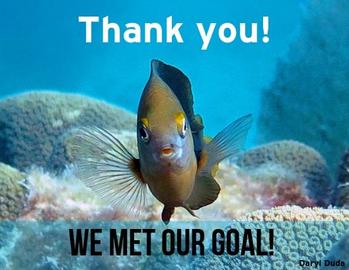
We are thrilled to share that we have reached our 2019 summer matching goal - to raise $70,000 to support REEF's citizen science, education, and research programs! So many REEF members stepped up to show their support for marine conservation, and we are so appreciative of your outstanding efforts. From all of us at REEF, thank you to everyone who contributed to our summer fundraising campaign, and a special thank you to the Curtis and Edith Munson Foundation, The Henry Foundation, and The Meyer Foundation who generously matched these gifts.
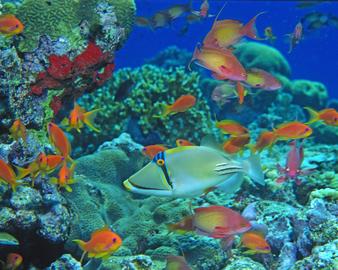
The holiday season is here, and that means cherished time with loved ones, plenty of celebrations, fun memories, and more. It can be tricky to choose the perfect holiday gift for your friends and family. We have the perfect solution!
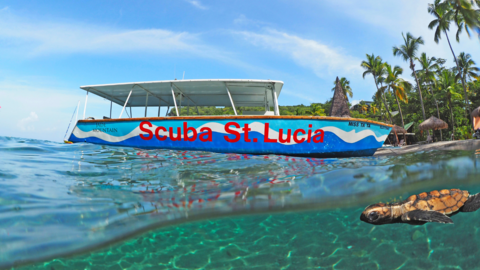
REEF is proud to highlight one of our outstanding Conservation Partners: Scuba St. Lucia at Anse Chastanet Resort. REEF Conservation Partners are active organizations and dive shops committed to protecting marine environments worldwide. As valued REEF ambassadors, they serve as centers for marine conservation actions, outreach, and education. You can view the full listing of Conservation Partners or register your organization as a REEF Conservation Partner here.
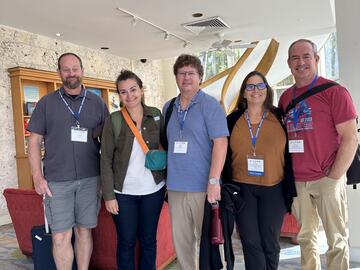
Last month, a team of scientists represented REEF at the 76th annual Gulf and Caribbean Fisheries Institute (GCFI) conference, held in The Bahamas. REEF programs and data were represented by REEF Co-Executive Director, Dr. Christy Pattengill-Semmens, and Conservation Science Associate, Lex Bryant, as well as our partners from Scripps Institute of Oceanography (Dr. Brice Semmens) and Oregon State University (Dr. Scott Heppell).