Photo by Janna Nichols

In temperate (colder) water regions REEF asks surveyors to also monitor a select regional list of invertebrates and algae. This is in addition to monitoring all fish that are seen during a survey.

  • PNW: Pacific Northwest & Alaska
  • CAL: California
  • NE: Northeast US & Eastern Canada
  • SAS: South Atlantic States
  • EAM: Eastern Atlantic and Mediterranean

In these regions, surveyors have the option to conduct a Fish Only (FO) survey, an Invertebrates Only (IO) survey, or both Fish and Invertebrates (FI) survey.

Flame Angelfish (Centropyge loricula). Photo by Ken Marks.

Meet our November Fish of the Month, the Flame Angelfish, Centropyge loricula, a living ember of the Pacific reef. With shorter days settling in, this little fish brings a welcome burst of color: a brilliant red-orange body banded in black and tipped with electric blue.

This October, REEF’s Ocean Exploration Center brought the community together for a day of building tools. On Saturday, October 3, REEF hosted Building with Claude: AI for Ocean Conservation in the Florida Keys, a day that paired six Florida Keys nonprofits with volunteer AI builders who drove down from Miami. Every organization left with practical ideas, and several with working prototypes.

Meet Nicole Duran, REEF’s Campus Operations Assistant, who joined the REEF team in October 2026. Based at REEF’s Key Largo Campus, Nicole supports the day-to-day administrative and operational work that keeps REEF’s ocean conservation programs running smoothly, including shipping and store support, back-office processing, and facilities coordination.

“I’m so excited to work with a purpose, protecting our reefs and using my creativity to support such a great foundation with an amazing team!”

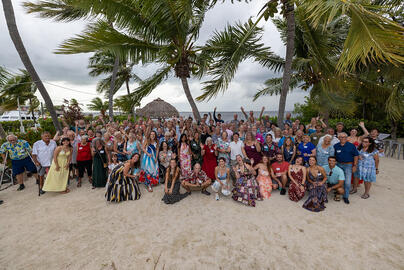
REEF Fest 2026 is a wrap, and what a weekend it was! From October 15–18, divers, snorkelers, scientists, and ocean lovers from near and far gathered in Key Largo for four days of seminars, socials, diving, and celebration. To everyone who joined us, whether in person or online, thank you. You are what makes REEF Fest so special, and together we celebrated not just marine conservation, but the collective impact of the entire REEF community.


The Error Checking team processes your surveys and as you may know- emails you asking for a photo or description about a possible questionable sighting. This two-step process ensures our database accuracy. Here are some common corrections the team comes across:

Remora- Sharksucker-Whitefin Sharksucker

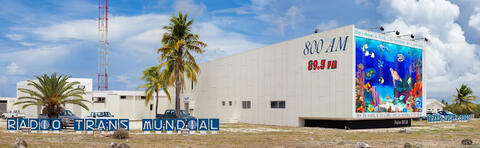
Join us for a FREE marine life education class at the Trans World Radio (TWR) Bonaire Headquarters on Thursday, October 29 at 7:00 pm AST 

We’ll be discussing the wonderfully strange world of odd-shaped dwellers: Scorpionfish, Frogfish, and the elusive batfish- some of the reef’s most fascinating and camouflaged residents.

What to Expect:

Learn how to distinguish commonly confused fish species

Explore what it means to be a citizen scientist and how you can contribute to the Volunteer Fish Survey Project

Since 2001, REEF has been counting sea turtles on surveys per a partnership with Seaturtle.org. It’s always fun to see these reptilian friends underwater. Sometimes close up and sometimes in the distance, they can be easy to identify or pose a real challenge. Hopefully, these tips will help if you see one close up munching on sponges or as a shadowy shape off in the distance on your safety stop. The most commonly seen sea turtles reported are:

REEF is excited to announce not one, but two recent Golden Hamlet Club members: Karen Bogart and Sue Manning.

Karen has done surveys in TWA, SOP, and CIP. She is an expert in TWA and amateur in the others. “Although I am going to try to get a higher level in CIP since we are going to the Red Sea and Maldives next year.” Nothing is stopping her as she wants to then achieve Ultra Golden Hamlet status. Karen lives in Roatan and loves to share REEF with other divers.

Pages