
First sighted in Lebanon in 2012, invasive lionfish have since become well-established in the Mediterranean Sea. In an effort to provide policy recommendations for the lionfish invasion within the Mediterranean Sea, REEF joined in a global collaborative effort with researchers from Europe, Asia, Africa, North America, and the Caribbean to share successes and failures from two decades of lionfish management in the Western Atlantic.
Current search
Search found 453 items
- INVASIVE
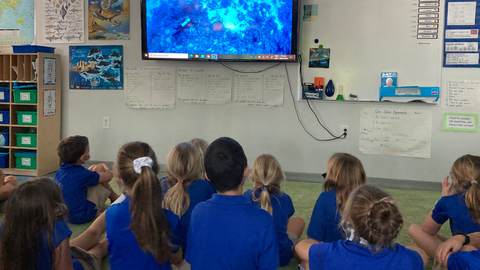
Bring REEF's mission into your classroom with Virtual Discovery Programs! Designed for students of all ages, these one- to two-hour Zoom programs combine an engaging live lesson with hands-on activities and show students that anyone, anywhere, can be a citizen scientist.
Featured programs include:
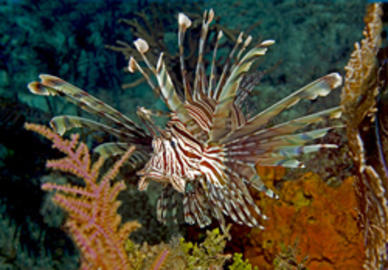
Lad Akins, REEF Director of Special Projects, recently co-authored a paper summarizing work documenting feeding patterns of lionfish in the Bahamas. Understanding the predation behavior of this invasive species is important to be able to predict and mitigate the effects of Indo-Pacific lionfish (Pterois volitans) on Caribbean fish communities. Lad and his colleagues at Simon Frasier University studied the activity levels and prey consumption rates of lionfish on 12 shallow coral reefs in the Bahamas in relation to time of day and prey availability.
Caroly’s Notes
In 2017, REEF is offering an Invasive Lionfish Research Trip, once again in partnership with the fabulous Go West Diving and Kura Hulanda Lodge. |

It’s not too late to join REEF on one of our fantastic Field Survey Trips this year! We have a couple openings left on some upcoming trips this fall and winter. Join us and become part of one of the world’s largest ocean citizen science efforts, featuring an itinerary of diving, seminars and fun.
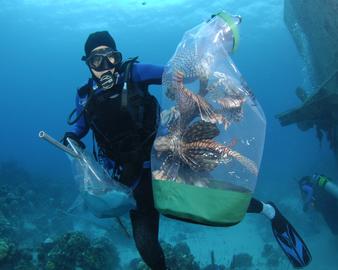
REEF staff co-authored a new publication in the scientific journal PeerJ that features research findings from our Invasive Lionfish Research Program. The paper, titled "Setting the record straight on invasive lionfish control: Culling works", evaluates the effectiveness of lionfish removal efforts. Frequent culling of the invasive Indo-Pacific Lionfish throughout the Caribbean has been shown to cause a shift towards more wary and reclusive behavior by lionfish, which has prompted calls for halting culls.
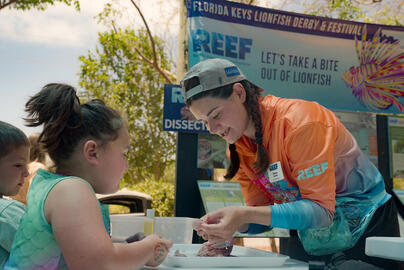
We’re counting down to the 2026 Florida Keys Lionfish Derby & Arts Festival this April! This event brings together invasive lionfish removal, vibrant local arts, and conservation action - engaging the community in ocean stewardship through interactive and educational experiences. Here’s what to expect:
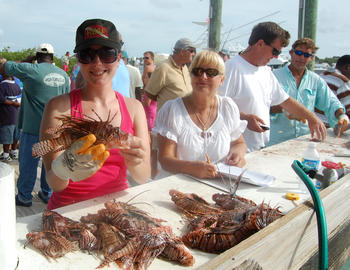
We are excited to share the latest publication stemming from REEF's Invasive Lionfish Research Program - "Mobilizing volunteers to sustain local suppression of a global marine invasion," recently published in the scientific journal Conservation Letters.
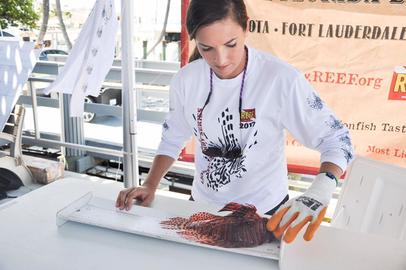
This summer, divers and snorkelers from around the country came together to combat the invasive lionfish, vying for over $14,000 in total cash prizes. The series included derby events throughout Florida including Sarasota, the Upper Keys, Fort Lauderdale, and Palm Beach County, as well as Lionfish Culinary Competitions in conjunction with the Sarasota and Palm Beach County derbies.