

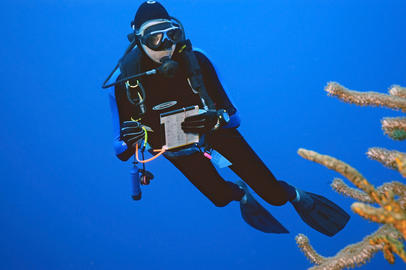
As Fall is upon us, we look ahead to 2009 and a great lineup of REEF travel opportunities. Our partners at Caradonna Dive Adventure have helped us put together an exciting Field Survey schedule, including St. Croix, Bermuda (with Ned and Anna DeLoach), and Grenada on the Peter Hughes Winddancer (with Paul Humann). These week-long projects are led by experts in fish identification and include great diving, learning, and camaraderie with like-minded divers and snorkelers. Your non-diving companions are welcome on all of the land-based projects.
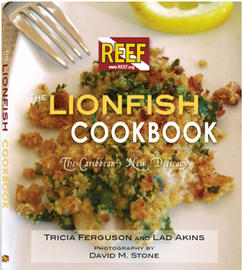
REEF announces the release of "The Lionfish Cookbook", available for $16.95 online at http://www.reef.org/catalog/cookbook. The book is a unique blend of 45 tantalizing recipes, background on the lionfish invasion and its impacts, as well as information on how to safely catch handle and prepare the fish. Invasive lionfish are a new threat to western Atlantic, Caribbean and Gulf of Mexico waters.

Want to get the latest news and updates from REEF? Then be sure to check our the REEF Facebook Page. You don't have to be on Facebook to view the page, but if you do have a Facebook profile, be sure to "like" us so that all of the latest information about REEF's programs and events, our marine conservation work, and exclusive content and stories will go straight to your feed.

Want to get the latest news and updates from REEF? Then be sure to check our the REEF Facebook Page. You don't have to be on Facebook to view the page, anyone can look at the content. If you do have a Facebook profile, be sure to "like" us so that all of the latest information about REEF's programs and events, our marine conservation work, and exclusive content and stories will go straight to your feed.
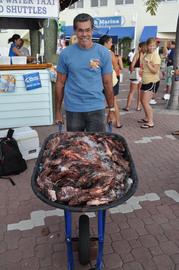
Ground-breaking invasive lionfish findings were featured in a paper published earlier this month in the scientific journal, Ecological Applications. The research was conducted as a collaboration between REEF, Oregon State University, Simon Fraser University, and the Cape Eleuthera Institute. The new study, conducted by Dr. Stephanie Green (OSU/REEF), Lad Akins (REEF), and others, confirms for the first time that controlling lionfish populations in the western Atlantic Ocean can pave the way for a recovery of native fish.
We are proud to release REEF's 2014 Annual Report, reviewing accomplishments from our ocean conservation and education programs. Click here to view the Annual Report. In the report, we highlight many achievements and successes in 2014, such as:
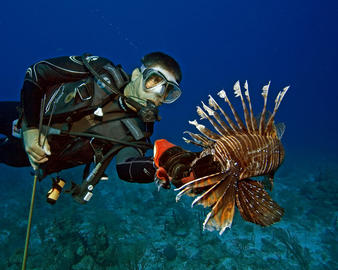
REEF is continuing to lead the charge on combating invasive lionfish! The 2016 Lionfish Derby Series is just around the corner and it’s going to be bigger than ever.
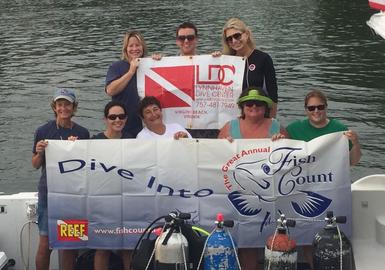
REEF’s 2016 Great Annual Fish Count (GAFC) brought together experienced and beginner fish watchers to count fish (and invertebrate) populations. Beginning fish ID classes were held, and then students were able to use their new skills out in the water during organized GAFC events. Participating groups and shops this year were based in several of REEF's regions, including the TWA, SAS, NE, CAL and PNW regions. The biggest GAFC events this year were held in our NE and California regions.
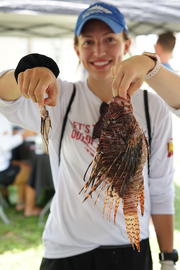
Purchase your VIP passes or register a team today! For complete event details, visit www.REEF.org/lionfish/derbies.

On Saturday, March 30, ten teams of 34 divers removed 620 invasive lionfish during REEF’s 7th Annual Winter Lionfish Derby, held at Sharkey’s Pub and Galley Restaurant in Key Largo. Between sunrise and 6 p.m., competitors scoured Florida Keys reefs in an attempt to to bring in the smallest lionfish, largest lionfish, and most number of individual lionfish. Team Forever Young caught the most fish at 149 individual lionfish.